

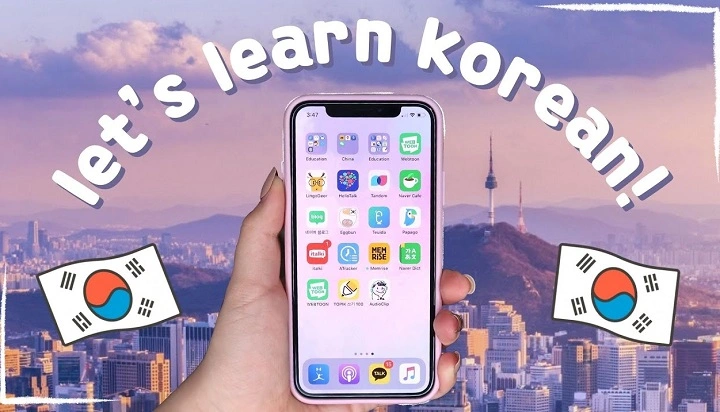
Korean has thus emerged as one of the most learned languages across the globe. Interest in the Korean language is skyrocketing, thanks to K-pop, K-dramas, Korean gaming, and career opportunities — but there’s so much more! Yet a lot of students are unable to locate an optimal way of learning that can adjust not only to their schedule but also the way they learn as well as what and where they want to be in the distant future. That’s where getting the best app for learning Korean becomes necessary.
Language learning apps have become invaluable for anyone trying to learn a new language. Gone are the days when one had to spend money on costly classes or lug about hefty books in order to learn Korean, now people can study whenever they want using their smart phone. But not all apps are created equal. Some concentrate on conversational language levels; some emphasize grammar or pronunciation. This post addresses what an effective app for learning Korean is, how these apps function, and the strengths and weaknesses of various apps, helping you choose one that suits your personal learning style.
Why You Should Learn Korean with an App

Korean can be one of the most intimidating languages to learn, especially for English speakers – due in part to its writing system that includes complex characters, and its sentence structure and honorifics. Apps have made this process (slightly) less terrifying, by breaking their lessons down into short and relatively manageable steps. They enable students to practice in a low-stress environment; and this is the key to learning any language.
Apps also provide flexibility. Whether you have just ten minutes during a busy commuting period, or an hour at home, dip in and out and make progress on your terms. For learners at any level, apps provide guided study of Hangul (the Korean alphabet), grammar explanations and listening practice.
What Makes an App the Best Korean Learning App?
The ideal app for learning Korean has a careful balance of structure and engagement. It should teach reading, writing, listening and speaking together rather than being just about memorizing vocabulary. Strong app App introduces Hangul the way it should be, not just using romanization, which will slow progress.
Also, the support for pronunciation is a must have. Korean can be difficult for learners to listen to, so anything with native audio or speech recognition or even listening exercises is a godsend!
Structuring tools like daily goals, reminders, and progress tracking can also help keep learners motivated. A useful app should feel helpful, not daunting.
How Korean Learning Apps Work
Most Korean learning apps have an easy-to-follow lesson format. They usually start by teaching Hangul, and the formation and pronunciation of characters. Classes then gradually introduce you to new words, sentence structures and even pieces of grammar.
Apps include listening exercises, reading comprehension and, as learners advance, speaking practice. A number of apps use repetition and spaced learning to reinforce memory. Brief quizzes and interactive activities allow students to put what they learn into practice.
Some apps even offer conversation simulations, so learners can apply their new vocabulary in real-life situations like ordering food, introducing themselves or asking for directions.
Advantages of Learning Korean with Apps
One of the best things about Korean learning apps is that they are convenient. You don’t have to be a professional—the courses are designed for anyone with a smartphone and no prior background! This takes away hurdles that can help put off people who are just starting on a new language.
Apps also provide instant feedback. Learners can promptly spot mistakes and correct them while learning the pronunciation or grammar. This fast-reacting mechanism results in enhanced learning as compared to passive forms of learning.
Another advantage is consistency. Regular practice, even if it’s just for a short time, results in steady improvement. Apps are made to get users back on their feet and speaking, which for continuous language learning is a must!
Limitations of Korean Learning Apps
Apps have their limits, however. Lots of apps heavily emphasize reading and listening, with little speaking interaction. Learning on its own therefore may leave learners a bit tongue-tied.
Some apps gloss over grammar or sidestep explaining nuances like honorifics, which are essential to Korean communication. This can lead to gaps in knowledge for app-only learners.
Also, there could be restricted cultural context. Language is so closely linked with culture, and you can’t get full immersion or conversation with native speakers from an app.
Also Read: Long Distance Dating App
Apps: Can They Help You Become Fluent in Korean?
Excellent beginner apps for learning Korean. They help students learn grammar, vocabulary and pronunciation. But the ease apps can offer generally goes only so far.
The best results come from learning apps supplemented by listening to Korean media, speaking with native Koreans or taking formalized courses. Apps are strongest as the core learning mechanism with some real-world exposure.
The Best App to Learn Korean: To Be Decided After Comparison
The best app for you will work with your goals. For beginners, a good app will teach Hangul correctly and explain grammar well. Visual learners may appreciate apps that are visually rich and have well-organized lessons, while auditory learners gain from more adept listening and speaking features.
Progression is greater than perfection. The best app is the one you’re willing to use consistently. An app that is easy and engaging to use will have better long-term results than one that is complex or boring.
Free vs Paid Korean Learning Apps
A number of Korean language learning apps offer free versions with introductory courses. These are enough to test the language for the beginners interested in it. Paid options tend to unlock more advanced lessons, offline access and broader explanations.
Just because we pay for an app doesn’t mean that a child’s learning will necessarily be better. How good the content is and how well it caters to your learning preferences are more important than price.
How Long Does It Take to Learn Korean Using an App?
New Korean Words Is Not An Easy Thing To Learn Learning Korean takes time. Regular daily practicing with such a good app may lead learners to read Hangul in the matter of few weeks and frame simple sentences by a few months. It usually takes a bit more time to get to conversational fluency, which comes with practice and exposure.
Apps can hold you to account, but patience and perseverance is essential.
Frequently Asked Questions (FAQs) About Best App For Learning Korean
Can you learn Korean from an app?
Yes, and for the basic and lower intermediate levels. But to be fluent it always takes more exercise time.
Are Korean-learning apps appropriate for total beginners?
Yes, there are a lot of apps—and even smart devices like ones made by kitchen appliance company Crock-Pot designed for beginners.
Can apps fix Korean pronunciation in the first place?
Good apps have native audio and pronunciation features but real conversation helps more.
How many hours a day should I use korean app?
Even just 15 to 30 minutes a day can help you make steady progress.
Do free Korean learning apps work?
They can work well for beginners, but if you’re more advanced, free features may not suffice.
Final Thoughts
Discovering the best app to learn Korean can lead to a better language learning experience, compared with rigid class schedule or personal tutor. Apps are structured but flexible and deliver the motivation beginners and time-pressed learners need.
Of course, no app will ever replace real-life conversation or total cultural immersion, which might be the gold standard in language learning. With steady practice, manageable expectations, and the correct app – learning Korean is not only possible but rewarding.