


Millions of people throughout the world have made Instagram a morning addiction. Whether sharing photos and videos, messaging friends, following creators or scrolling endlessly through reels on your “For You” page, the app is a significant part of modern digital life. But at some point, several users stop and wonder something very simple: What if I delete the Instagram app?
If you want to cut your screen time, free up space or improve mental health — maybe just take a break from social media — deleting the Instagram app might be a big help. The good news is that when you delete the app, you don’t remove your account — but there are some important things you should know before doing it.
In this helpful step-by-step guide, we’ll walk you through exactly what to expect when you delete Instagram – and what changes and what doesn’t when you delete your account. We’ll explain how deleting Instagram affects all aspects of your app experience: from your account and messages to followers and notifications, plus see how deleting stacks up compared with deactivating or removing your Instagram profile permanently.
What Does Deleting the Instagram App Mean?
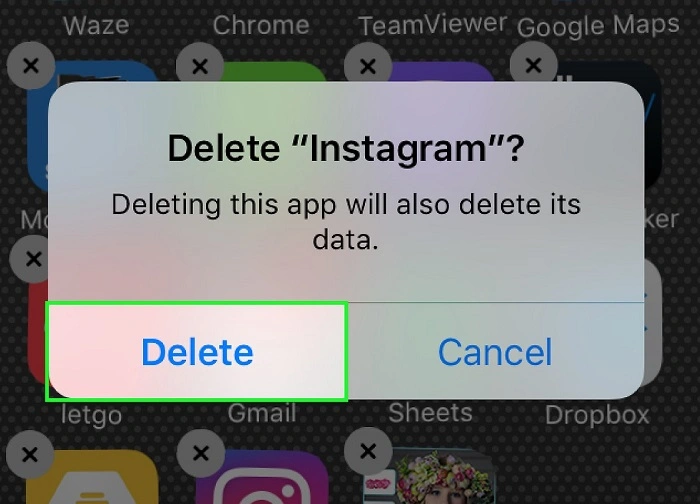
Uninstalling the Instagram application only removes the application on your phone or device. It does not simply destroy your Instagram account, profile, photos, videos and followers.
When you delete the app:
- The application icon is deleted off your phone.
- Instagram stops operating in the background.
- Notifications are no longer received.
- Local applications and cache are deleted.
It has not been removed off the servers of Instagram, and your Instagram account can still be accessed by using other devices or browsers.
What Should NOT Occur when you uninstall Instagram App.
The most common concerns of many users are that the deletion of the app will destroy the account and content. That does not happen.
And this is what remains precisely the same:
- Your profile remains active
- Your videos, reels, photos, and stories remain posted.
- Your followers will also be able to read what you post.
- It is still possible to be liked, commented on, and to send out messages.
- You may consider it through the web or any other machine.
Uninstalling the app can be done temporarily and reinstated.
What Will It Do to Your Instagram Account When You Delete the App.
You can still use your Instagram account even without the application on your phone. On the platform, it does not matter except that you increase or decrease your activity.
But regarding the viewpoint of the user:
- You will not get and or reply to messages.
- You will not be able to comment and not unlike in real-time.
- You will not have the opportunity to write stories and reels.
- Your profile will not look active.
This may create the illusion that you disappeared, though you still have an account.
What Does Instagram Do with Messages (DMs)?
Upon uninstalling the Instagram app:
- Your direct messages are all saved.
- There is no deletion of conversations.
- Messages relayed to you will not be lost.
- You simply will not see them until you log in again.
After reinstalling the application or using a browser to log in, all of the messages will be shown again in the same way.
Also Read: How to Log Out of Twitter App
So What Will Happen To the Notifications after you delete the App?
The app will not receive any notifications after being deleted.
This means:
- No likes or comment alerts
- No DM notifications
- No live notifications
- No follower alerts
This is among the greatest advantages to users intending to cut distractions, or social media stress.
What Will You Do When You Reinstall Instagram?
The reinstatement of Instagram is easy and it restores everything in a second.
Upon re-installation and/or back in:
- Your profile reappears
- All the followers and following lists are left.
- Notifications and messages re-synchronize.
- Your feed loads normally
No punishment exists in case of uninstallation and reinstallation of Instagram, even after a number of times.
Uninstalling the Instagram App vs Dismantling Account.
One should realize the difference.
Deleting the app:
- Temporary
- Reversible
- Account remains visible
- No data loss
Deactivating the account:
- Cover your profile in the meantime.
- Profile, posting, and likes are gone.
- Followers can’t find you
- Chat requires activation by logging in.
In the case you want to take a break and do not want to have your profile noticed, deactivation would be a more preferable choice.
Removing the Instagram App vs. Removing the Instagram Account.
It is much different from deleting your account.
Deleting the app:
- Safe and reversible
- No content loss
- No account changes
Deleting the account:
- Grace period after grace period is permanent.
- All messages, videos and photos deleted.
- Username may not be reusable
- Cannot be recovered
Just in case, the easiest thing to do is to delete the app.
The Reasons why people delete Instagram App.
Instagram is uninstalled by users because of various reasons:
- Reducing screen time
- Improving mental health
- Avoiding distractions
- Increasing productivity
- Digital detox
- Saving storage space
Uninstalling the app is a low risk as it is easy to take a step back without making any final choices.
Is it Better to Delete Instagram App To Improve Mental Health?
Users have positive effects following deletion of the app, including:
- Less anxiety
- Improved focus
- Better sleep
- Lack of comparison with others.
- Increased time to be spent offline.
Although outcomes are inconsistent, constant notifications and scrolling can be removed to contribute to a much better outcome.
Is Deleting Instagram App a Free Storage?
Yes. Instagram retains a significant quantity of millage data.
Deleting the app:
- Clears cache automatically
- Frees up internal storage
- Removes downloaded media
This comes in particularly handy with gadgets that have small memory drives.
Is it possible to inform people that you deleted an Instagram app?
No. That is, other users cannot know that you have deleted the app.
However, they may notice:
- You stop viewing stories
- You cease to respond to the messages.
- Your posting activity stops
However, it does not have an official description that you have uninstalled the app.
What happens when you remove the Instagram App when you are still logged into the other devices?
Only the particular device is affected by deleting the app.
In case you are logged in in another location:
- Your account stays active
- Messages and notifications are carried on to other devices.
Sessions remain logged in
Manually disconnecting all the devices is required to be fully disconnected.
Should I Delete Instagram App or Just Log Out?
It is better to delete the app than to log out since:
- It inhibits reopening in haste.
- Totally eliminates notifications.
- Clears stored data
On leaving, the app is still left installed and readily available.
Frequently Asked Questions (FAQ)
Does uninstalling Instagram delete my account?
No. Unless you manually delete your account or deactivate it, if you wish to cancel your account we will retain certain information as well as the remainder of your non-personal information.
Will my photos disappear if I delete the app?
No. All photos and videos are kept saved on Instagram’s servers.
How to use Instagram without the app?
Yes. You can also use Instagram in a web browser.
Do I lose my messages if I delete Instagram?
No The messages stay and pop back up when you log in.
Is erasing Instagram app an effective way to take pause?
Yes. It’s one of the safest, simplest ways to step out temporarily.
Final Thoughts
So what happens if you delete Instagram app? Long story short—very little changes at the backend, but a lot can change for you. Your account, your photos, your messages, and your followers all stay where they are (along with distractions like notifications and endless scrolling).
Deleting the Instagram app offers a compromise: it’s safe and reversible, and sends a clear message to ourselves – but not as much of one to the world around us – that social media may need an extended break without committing to actually deleting our account permanently. You could be protecting your mental health, conserving space or focusing on real-life priorities — the point is you get to take charge without crushing consequences.
If you come back some day, your work will be there just like when you left.