


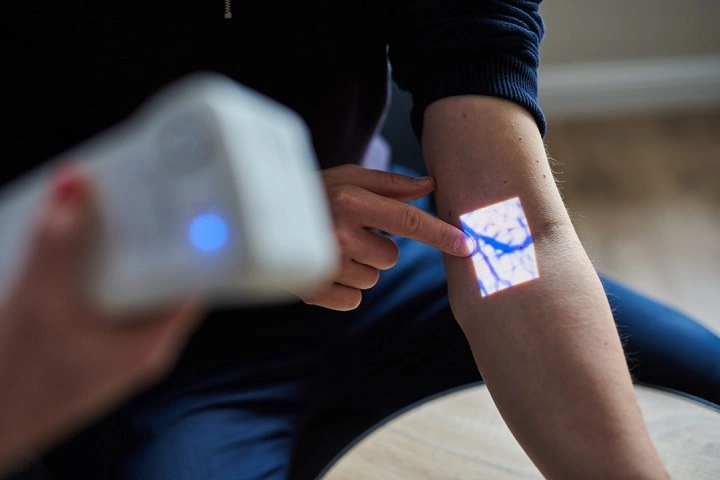
Veins are often frustratingly difficult to find. Sometimes it can be difficult for staffs and healthcare professionals, who are taking care of patients to find a good vein. Things like dehydration, age, skin color, obesity or poor circulation (in general) can make it hard to see veins with the naked eye. Here’s where the concept of vein finder app comes into picture.
There is even a vein finder app that purports to enable smartphone users to see their veins. It’s not a replacement for professional medical equipment, but sure enough an useful tool for educational reference, general guide and so on. It’s important to know what a vein finder app can and cannot do before you start to trust it.
What Is a Vein Finder App?
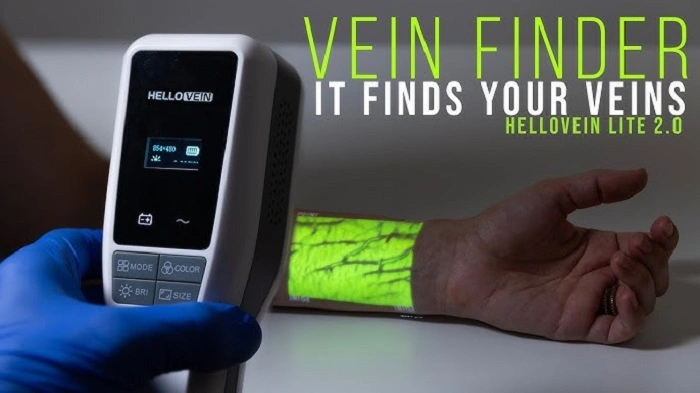
Vein finder apps are application software that purport to be able to identify or visualize veins under your skin, and claim to use technology such as the camera of a smart phone. These apps usually increase contrast, add filters or imitate infrared-like effects to show veins on screen.
While hospital-grade vein viewing devices use near-infrared light, a vein viewer app is within the constraints of consumer smartphone hardware. It is for this reason that it only gives an approximation and doesn’t yield professional medical results. Vein finder apps are mostly developed for educational purposes, demonstration, general guidance and not directly for medical procedure use.
Why People Look For Vein Finder Apps
There are many reasons people use apps that find veins: Anatomy students sometimes use them to study vein patterns. Caregivers may find them helpful to help get an overview of vein locations before helping with everyday care. Sometimes people who are subjected to frequent blood tests or injections also use these apps to familiarize themselves with the structure of their veins.
They are also popular because they are easy to get. There are professional vein-finding devices, but those cost too much and are generally only available in hospitals or clinics. A mobile application provides an inexpensive and easily accessible solution for non-critical use scenarios.
How a Vein Finder App Works
Apps that purport to find your veins instead just overlay visuals rather than actually using infrared to scan. Most apps take real-time pictures of the skin using the phone’s camera. The filters are used to enhance a contrast between the veins and their environment. Some apps employ the flashlight to light up your skin for better visibility.
Better apps feature Color inversion, edge detection or shadow enhancement algorithms. These visual gimmicks can enhance the look of the veins onscreen, making them appear darker or more pronounced. However, because smartphones are not able to look through layers of skin like an infrared device can, results fluctuate depending on the lighting and user’s skin color as well as how good your phone camera is.
Vein Finder Apps: The Accuracy and Reliability
Vein finder apps imply accuracy and this is one of the most critical themes. Such applications can occasionally emphasize superficial veins that are visible, but not as a reliable result. Even deep, small, or not clearly demarcated, veins may be completely invisible.
Performance is greatly influenced by environmental conditions, including lighting and camera resolution. In addition, skin pigmentation may also factor into this, as contrast-based viewing may not be consistent across users. Due to these constraints, vein finders apps should never be utilized for medical diagnosis or invasive action.
Medical vs Non-Medical Use
It is important to differentiate between medical-grade vein finders and mobile apps. If you’ve ever been to the doctor or hospital and had an IV, they used near-infrared light to detect your hemoglobin blood content so they could show veins in real time under your skin. They are controlled in regulated circumstances by professionals.
Vein finder apps, on the other hand, are not medical devices. They are not intended for medical such as learning, visualisation or curiosity. Practicing the skill by giving injections, drawing blood or placing an IV without professional training can be unsafe.
Advantages of an App for Locating Veins
One of the major upsides is that it’s accessible. You can download a vein finder app on your smartphone and see what veins look like in various circumstances. For some who are nervous about needles, this can help relieve some anxiety because they will know where the vein is located.
Vein finder apps can also be used as learning tools. They can be used by students and trainees to study the patterns of veins in individuals or learn how factors such as hydration or temperature affect whether veins show up. For caregivers, he said, the app fills a need for a basic orientation before coming to the other professionals.
Limitations and Risks
They do however have drawbacks too ” as indicated below. The main limitation is precision. And because these apps cannot peer beneath the skin, they can yield misleading images. There are many false positives or missed veins.
Another risk is misuse. Depending on an app for general medical procedures that aren’t taught could cause you to experience injury, discomfort or infection. Some of the apps may additionally present privacy issues if camera data is saved or sent unsecurely.
Fans should also be wary of apps that promise the moon. Any app that claims to deliver hospital-grade accuracy from only a phone camera should raise historical questions.
Who is the Vein Finder App for?
Vein finder apps are most appropriate for educational/ informational use. The resources could be useful for students, educators and others interested in anatomy. They can also provide a non-invasive means of allowing people to get better acquainted with their own bodies.
Health care workers, in general, prefer medically approved devices rather than apps. But some may use apps for demonstration or patient education, rather than in actual procedures.
Selecting the Right Vein Finder App
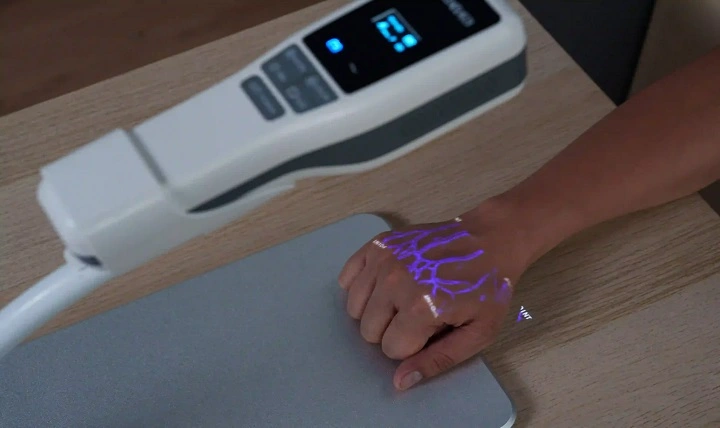
When choosing an app for vein finder, users will want transparency. More trustworthy apps make it clear what they don’t do or aren’t for. Ease of use can be enhanced by a clean interface, filters that are adjustable as well as offline capabilities.
User reviews might be a good place to manage expectations. Apps with stronger privacy policies and less outlandish medical claims are typically safer bets.
Privacy and Safety Considerations
Privacy is a major concern, since vein finder apps rely on the camera. People should read carefully through permissions and avoid apps that request unnecessary access to data or storage.
You can achieve better results and experience less eyestrain by using the app in a well-lit environment where you can control glare on the screen. It’s also important to remember that these apps are instruments for the visualization, not diagnosis and treatment.
The Next Generation of Vein Finder Technology
With the development of such smartphone technology, we may see improvements on vein visualization apps. More advanced cameras and sensors and image processing powered by artificial intelligence might allow them to grow increasingly accurate over time. Still, there is bound to be a divide between mobile apps and professional medical equipment.
Subsequent applications may instead emphasize education, simulation, and patient engagement, as opposed to competing with clinical devices.
FAQs
How accurate is a vein finder app?
Vein finder apps can bring out some superficial veins, but they can vary in accuracy and should not be relied on for medical purposes.
Is a vein-finder app the solution to hospital vein scanners?
No, not even close Hospital vein scanners work by using infrared light and are much more accurate than smartphone apps.
Vein finder apps: are they safe?
Yes, to be used for educational, illustration purposes. They are not safe to use for injections or drawing blood.
Will these vein finder apps work for all skin tones?
Results vary. Performance however may vary depending on skin tone and lighting, as they are contrast-based.
Vein finder apps record the camera data, confidential they store it persistently?
This depends on the app. Users are advised to check privacy policies and permissions before using.
A vein finder application might be a cool toy in certain circumstances provided you use it well and are aware of its limitations. It provides accessibility, convenience and educational use as well, good for those who are curious about anatomy or interested in vein seeing.
But it’s no replacement for professional medical and equipment, though. Because of limitations in the hardware on smartphones, being accurate is impossible. The one thing to not go cheap on is safety – professional care always trumps cutting corners.
When used responsibly, a vein finder app can serve as a helpful visual aid — but as an aid and nothing more.